

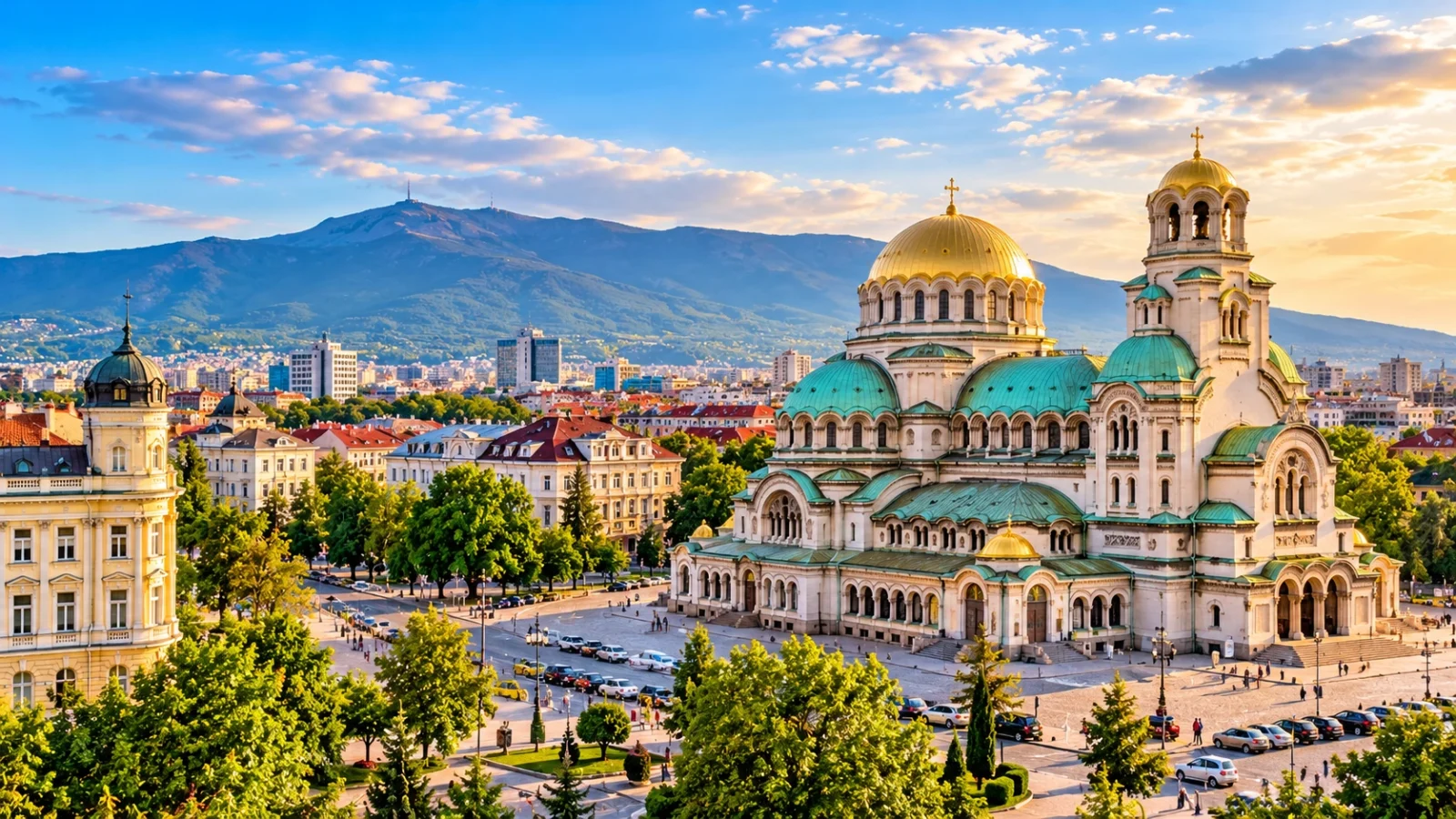
Sofia, the capital of Bulgaria, is a rewarding destination for travellers who enjoy historic landmarks, ancient ruins, green spaces and lively city streets. Set near the foothills of Vitosha Mountain, the city combines centuries of history with modern cafés, shopping areas, museums and neighbourhoods where everyday Bulgarian life continues beyond the main tourist attractions.
One of the best things about visiting Sofia is how much you can experience in a relatively small area. You can admire the golden domes of Alexander Nevsky Cathedral, discover Roman remains beneath the modern city centre, explore traditional religious buildings and finish the afternoon with Bulgarian food along a busy pedestrian street.
Whether you are planning a weekend break, a longer Bulgaria holiday or a wider trip through Europe, Sofia offers plenty of ways to fill your itinerary without rushing from one attraction to another.
This guide covers the best things to do in Sofia, Bulgaria, including historic sights, cultural experiences, parks, local markets and a day trip into the surrounding mountains.
1. Visit Alexander Nevsky Cathedral
Alexander Nevsky Cathedral is one of Sofia’s most recognisable landmarks and a natural starting point for a first visit. Its grand Neo-Byzantine architecture, impressive domes and spacious interior make it one of the most memorable buildings in the Bulgarian capital. The cathedral is also an active place of Orthodox Christian worship, so it has religious significance beyond its appearance.
Take time to look at the exterior from different angles before entering. The scale of the building is easier to appreciate from the surrounding square, where you can see its domes and architectural details without feeling rushed. Inside, the atmosphere is more subdued, with religious icons, decorative elements and a sense of ceremony.
The cathedral is especially appealing to travellers interested in architecture, photography and Bulgarian history. Nearby streets contain other important cultural sights, making it easy to combine the visit with a short walking route through central Sofia.
Visitor tip: Dress respectfully and check the latest visitor rules before entering. As it is a functioning religious building, services may affect access or photography. Check official visitor information before planning around specific opening hours.
2. Explore the St. George Rotunda
The St. George Rotunda offers a very different experience from Sofia’s larger monuments. Set among later buildings in the city centre, this historic brick church is known for its circular form and long history. Its position is part of the attraction: a visitor can move through a modern urban setting and suddenly encounter a building that belongs to a much older period.
The rotunda is particularly interesting for travellers who like to understand how cities develop over time. Rather than standing in an isolated historic district, it remains surrounded by the changing city, illustrating how different eras of Sofia’s history occupy the same space.
Approach quietly, take a look at the exterior and check whether the interior is open during your visit. Access may be affected by religious services or other arrangements, so it is sensible not to assume that entry will always be available.
You do not need a long visit here. The rotunda works well as part of a walking itinerary that also includes the Roman remains of ancient Serdica and other central landmarks.
3. Discover the Ancient Serdica Roman Ruins
Sofia was known as Serdica during the Roman period, and traces of that ancient city remain visible beneath and around the modern centre. The archaeological area near the Largo and Serdika metro station is one of the most distinctive places to explore because historic streets and building foundations sit alongside contemporary transport routes and commercial buildings.
As you walk through the area, look for exposed sections of old roads, walls and archaeological remains. These features help explain why Sofia is often described as a city with layers of history rather than a destination built around a single historic period.
The ruins are especially convenient for travellers who have limited time. You can see parts of the archaeological area while moving between central attractions instead of setting aside an entire day for a museum visit.
For a more meaningful experience, take a moment to compare the remains with the streets and buildings around them. The contrast shows how the city has changed while retaining physical evidence of its Roman past. Sofia’s official tourism information highlights the remains of ancient Serdica, including Roman streets, houses, baths and fortifications.
4. Walk Along Vitosha Boulevard
Vitosha Boulevard is one of Sofia’s best-known pedestrian shopping streets and a useful place to experience the city’s everyday atmosphere. Cafés, restaurants, shops and outdoor seating make it a natural stop between sightseeing visits.
Rather than treating the boulevard only as a shopping destination, use it as a place to slow down. Find a café, order a drink and watch the rhythm of the city. Depending on the time of day, you may see commuters, families, visitors and groups of friends meeting for a relaxed walk.
The boulevard is also a convenient choice for a meal after exploring central Sofia. You can compare menus, look for traditional Bulgarian dishes or choose a lighter café stop before continuing your walk.
For the best experience, explore at a comfortable pace instead of trying to cover every shop. The surrounding streets may also lead you to smaller restaurants and quieter corners away from the busiest stretch.
Best for: First-time visitors, casual shopping, cafés and an easy evening stroll.
5. Visit Boyana Church
Boyana Church is an important cultural site on the outskirts of Sofia, close to the foothills of Vitosha Mountain. Its international reputation comes largely from its remarkable medieval frescoes, particularly the paintings dated to 1259. The artwork is valued for its expressive faces and detailed depictions of people from the period.
The church offers a different perspective on Bulgarian heritage from the grand architecture of the city centre. It is smaller and more intimate, and the artistic details are central to the visit. Travellers interested in medieval art, religious history and UNESCO-listed heritage may find it one of the most worthwhile stops on their Sofia itinerary.
Because the church is outside the central sightseeing area, plan transport in advance and allow extra time for the journey. Check current admission arrangements, visiting restrictions and photography rules before setting out. Access to historic interiors can be controlled to help preserve fragile artworks.
Boyana Church is included on the UNESCO World Heritage List, and the official Sofia tourism information describes its 13th-century frescoes as a major part of Bulgaria’s cultural heritage.
6. Spend Time at the National Palace of Culture
The National Palace of Culture, commonly known as NDK, is a major cultural and event complex in central Sofia. Its large scale and surrounding open spaces make it a notable part of the city’s modern urban landscape.
The building is worth seeing even if there is no event you plan to attend. Walk around the exterior, explore the public spaces and look at how the complex connects with the nearby parks and pedestrian routes. Depending on the schedule, you may also find concerts, exhibitions, conferences or other cultural activities taking place.
If you enjoy discovering how residents use public spaces, NDK is a good place to pause between more traditional sightseeing stops. The area can feel different from Sofia’s old churches and archaeological sites, helping you understand the city as a living capital rather than only a historic destination.
Check the official event programme if you want to attend a performance or exhibition. Events, ticket availability and access arrangements vary, so it is best to confirm details before making plans.
7. Explore the Sofia History Museum
The Sofia History Museum is a useful stop for visitors who want to understand the city beyond its most famous landmarks. Its collections and exhibitions explore aspects of Sofia’s development, giving context to the buildings, streets and archaeological sites encountered around town.
The museum is housed in the former Central Mineral Baths building, a striking structure associated with Sofia’s history as a city with mineral-water springs. The building itself is worth noticing, with decorative architectural details that make it stand out from the surrounding streets.
A museum visit can be particularly helpful early in a trip. Learning about the city’s changing periods makes later visits to Roman remains, religious landmarks and historic neighbourhoods more meaningful.
Allow enough time to read the displays rather than moving quickly from one room to another. Exhibition content and opening arrangements can change, so check current visitor information before travelling there.
If you have only one day in Sofia, prioritise the museum according to your interests and available time. Visitors who enjoy history and cultural collections may find it a better use of time than adding another similar-looking church to an already busy itinerary.
8. Relax in Borisova Gradina Park
Borisova Gradina is one of Sofia’s best-known green spaces and a welcome break from museums, churches and busy streets. Its paths, trees and open areas offer room for walking, sitting or simply taking a pause during a city visit.
The park is a good choice if you want to see a quieter side of the capital. Instead of following a fixed list of monuments, you can take a gentle walk, find a bench or explore the paths that appeal to you. It can be especially pleasant after several hours of sightseeing on foot.
Travellers visiting in spring or summer may enjoy the greenery, while autumn can bring changing leaf colours. Conditions vary with the season, so wear suitable footwear if you plan to spend a long time walking.
Borisova Gradina can also fit into an itinerary for families or visitors who prefer outdoor time between cultural stops. Keep your schedule flexible and use the park as a place to rest rather than turning every part of the visit into another activity.
9. Browse the Women’s Market
Sofia’s Women’s Market, known locally as Zhenski Pazar, offers a more everyday experience than the city’s major monuments. Market stalls and nearby shops provide an opportunity to browse fresh produce, seasonal goods and local products while observing the ordinary rhythm of the city.
Markets can reveal details about a destination that are easy to miss when visiting only famous attractions. Look at what is in season, notice how vendors display their goods and explore the surrounding streets at a relaxed pace.
If you are interested in Bulgarian food, the market area can also inspire ideas about ingredients and regional produce. You may find fruit, vegetables, herbs or other items that are less familiar than those sold in supermarkets at home.
Go during the daytime when market activity is generally more noticeable, but check local conditions before travelling. As with any busy public market, keep valuables secure and ask before photographing vendors or their stalls.
The best approach is to explore respectfully without expecting the market to function like a curated tourist attraction. Its appeal lies in its everyday character.
10. See the Ivan Vazov National Theatre
The Ivan Vazov National Theatre is one of Sofia’s most attractive cultural buildings. Its elegant façade and prominent position near the City Garden make it an appealing stop for architecture lovers and anyone exploring the centre on foot.
Even if you do not attend a performance, the theatre is worth seeing from the outside. Spend a few minutes observing the building and then walk through the nearby garden, where locals often pause, meet friends or relax.
If you enjoy live performance, look into the theatre’s programme during your stay. A production can add a memorable cultural experience to a trip, although performances may be in Bulgarian and availability will depend on the schedule.
Check the official programme for performance dates, ticket prices and any language information. If you are not planning to attend a show, the theatre can still be included in a short central walking route with nearby parks and historic streets.
11. Visit the National History Museum
The National History Museum is a strong choice for travellers who want a broader understanding of Bulgaria’s past. Its collections cover different periods of the country’s history and can help connect the archaeological and cultural sights you see elsewhere in Sofia.
The museum is located outside the tight cluster of central attractions, so it is worth planning the journey rather than assuming you can fit it into a short walk between landmarks. Consider pairing it with Boyana Church if transport and opening hours make that practical.
Allow enough time to explore the exhibitions that interest you most. Visitors who enjoy archaeology, historic objects and national heritage may want to spend longer here, while those with a short city break can choose the sections most relevant to their interests.
Before visiting, check current opening hours, ticket arrangements and any temporary exhibition information. The museum’s location and scope make it particularly useful for travellers who want to go beyond a quick overview of Sofia’s most photographed sights.
12. Take a Walk Through South Park
South Park is another appealing outdoor space, particularly if you want a more relaxed break from the city centre. It offers walking paths and green areas where you can take a break, enjoy fresh air or see a different side of local life.
The park is well suited to an unhurried visit. You do not need a detailed route or a list of specific sights to enjoy it; simply choose a path, walk at your own pace and stop when you find a pleasant place to rest.
South Park can be a good option for families, couples and travellers who want a low-cost activity between paid attractions. If the weather is pleasant, consider bringing water and allowing enough time to enjoy the surroundings rather than squeezing the visit into a few minutes.
For visitors staying several days, spending time in a local park can help balance a schedule filled with historic buildings and museums. Sofia’s green spaces are part of the city experience, not just an alternative for days when you have nothing else planned.
13. Explore Sofia Synagogue and Central Market Hall
Sofia’s Synagogue and the nearby Central Market Hall make a worthwhile combination for travellers interested in architecture, culture and food. Together with other religious landmarks in the centre, they reflect the city’s diverse cultural history.
The Sofia Synagogue is a significant religious building with distinctive architecture. Visitors should check whether access is available during their visit and follow any security, dress or photography requirements. As an active place of worship, it should be approached respectfully.
Afterwards, head towards the Central Market Hall area to browse food stalls and shops or take a break. It can be a convenient place to find a snack and observe the flow of people through the city centre.
This part of Sofia is especially useful to explore on foot because several cultural and historical sights are relatively close together. Rather than visiting each location in isolation, combine them into one route and leave time to notice the differences in architecture and atmosphere.
For a broader look at Sofia’s religious heritage, the city’s official tourism portal also lists landmarks including Banya Bashi Mosque, St. Sophia Basilica and St. George Rotunda.
14. Try Traditional Bulgarian Food
Sampling Bulgarian food is one of the most enjoyable ways to make a Sofia visit feel connected to the country. The city has restaurants, bakeries, cafés and casual eateries serving familiar regional dishes alongside modern interpretations of Bulgarian cooking.
Start with banitsa, a pastry commonly made with layers of dough and a filling that often includes cheese and eggs. Shops and bakeries are convenient places to try it for breakfast or as a quick snack. For a more substantial meal, look for shopska salad, a fresh combination of vegetables and grated white cheese, or a dish such as kavarma, a slow-cooked preparation that varies by recipe.
You can also look for grilled meats, bean dishes, soups and seasonal specialities. Menus differ from one restaurant to another, so ask staff about ingredients if you have dietary restrictions or allergies.
Do not feel that every meal needs to be a formal restaurant experience. A bakery stop, a simple lunch and one relaxed dinner can give you a varied introduction to local flavours without making food planning complicated.
Food tip: If you want to try several dishes, consider sharing plates with your travel companions. This lets you sample more of the menu without ordering a full portion of everything.
15. Take a Day Trip to Vitosha Mountain
Vitosha Mountain is one of the most appealing outdoor escapes from Sofia. Located close to the capital, it offers a change of scenery for travellers who want hiking routes, forest landscapes and open views instead of another day among city buildings.
The mountain has several access points and routes, with options that vary in distance, elevation and difficulty. Some visitors choose a short nature walk, while experienced hikers may prefer a longer route towards higher ground. Conditions can change quickly with elevation and season, so choose a route that matches your fitness and equipment.
Vitosha can be particularly rewarding on a clear day, but do not assume that the weather in central Sofia will match conditions on the mountain. Check the forecast, transport options and trail information before leaving. If snow, ice or poor visibility is expected, choose a safer alternative.
For a more relaxed outing, you could combine the mountain area with a visit to Boyana Church, provided you check the logistics and allow enough time for both stops.
Vitosha is a designated nature park and an established destination for walking and outdoor recreation. The official Sofia tourism website provides information on access points and popular routes.
Best Time to Visit Sofia
The best time to visit Sofia depends on the type of trip you want. Spring and autumn are often appealing for sightseeing because temperatures can be comfortable for walking and exploring outdoor attractions. Parks and streets also take on different character as the seasons change.
Summer can be a good time for outdoor cafés, city walks and day trips to Vitosha Mountain. However, temperatures can rise, so plan demanding walks for cooler parts of the day and carry water.
Winter brings colder conditions and the possibility of snow. The city’s museums, restaurants and indoor attractions can still make a winter visit worthwhile, but mountain trips require extra care because trail and transport conditions may be more challenging.
Before booking, check seasonal opening arrangements for the attractions you most want to see. Some sites have different schedules, and outdoor activities are more dependent on the weather than central museums and historic buildings.
How Many Days Do You Need in Sofia?
For a first visit, two full days can provide a good introduction to Sofia’s central landmarks, Roman history, food and parks. Three days gives you more flexibility for museums, Boyana Church or an outing to Vitosha Mountain.
One day in Sofia
Focus on the central area. Start at Alexander Nevsky Cathedral, continue to nearby historic sights and explore the archaeological remains of Serdica. After lunch, walk along Vitosha Boulevard, visit a museum or see the Ivan Vazov National Theatre, then finish with a Bulgarian meal.
Two days in Sofia
Use the first day for central Sofia’s architecture, religious landmarks and Roman remains. On the second day, visit Boyana Church and the National History Museum if their opening arrangements and transport work with your schedule. Leave time for a park, local market or a relaxed café stop.
Three days in Sofia
With an extra day, choose an outing to Vitosha Mountain or spend more time in museums and neighbourhoods. Your choice should depend on the weather, interests and whether you prefer outdoor activities or cultural sightseeing.
Getting Around Sofia
Sofia’s central attractions are often easiest to explore on foot, especially if you stay near the city centre. Walking lets you notice smaller buildings, cafés and streets that may be missed when travelling directly between major sights.
For longer distances, public transport can save time. Sofia has a metro system as well as buses, trams and trolleybuses. Use current official transport information to check routes, tickets and service changes before travelling.
Boyana Church and Vitosha Mountain require more planning than central landmarks. Check the route and journey time in advance, and avoid relying on an old timetable or assuming that every mountain access point has frequent transport.
Taxis and ride-hailing options may be useful for some journeys, but confirm the fare or booking details before setting off. If you plan to visit several attractions in one day, group nearby locations together to reduce unnecessary travel.
Practical Tips for Visiting Sofia
- Wear comfortable shoes: Many central sights are best explored on foot, and historic areas may have uneven surfaces.
- Carry a payment card and some cash: Payment methods can vary between businesses and markets.
- Check opening times: Churches, museums and heritage sites may have different schedules or restrictions.
- Respect religious spaces: Dress appropriately, speak quietly and follow signs about photography.
- Plan mountain trips carefully: Check weather, route difficulty, transport and daylight before hiking.
- Allow time for meals: Local food is part of the travel experience, so avoid making every stop a rushed checklist item.
- Keep an eye on belongings: Use ordinary precautions in crowded markets and busy public transport areas.
- Build a flexible itinerary: Leave room for weather changes, unexpected discoveries and places you want to explore for longer.
Frequently Asked Questions About Things to Do in Sofia, Bulgaria
Is Sofia worth visiting?
Yes. Sofia is worth considering if you enjoy history, architecture, local food, museums and access to outdoor scenery. Its mix of Roman remains, religious landmarks, green spaces and modern city life makes it different from a destination focused on just one type of attraction.
What is Sofia best known for?
Sofia is known for landmarks such as Alexander Nevsky Cathedral, its Roman heritage, historic churches, museums and proximity to Vitosha Mountain. The city also offers shopping streets, markets, parks and restaurants serving Bulgarian cuisine.
Is two days enough to visit Sofia?
Two days is enough for a useful first visit focused on central attractions and a few cultural experiences. If you want to visit several museums, explore more neighbourhoods or take a mountain day trip, consider staying for three days.
Can you explore Sofia on foot?
Many central attractions can be visited on foot, particularly if your accommodation is in or near the centre. Public transport is helpful for locations farther away, including some sites outside the central sightseeing area.
What should I eat in Sofia?
Consider trying banitsa, shopska salad, kavarma and other Bulgarian dishes available at local restaurants and bakeries. Menus vary, so ask about ingredients if you have allergies or specific dietary needs.
Is Vitosha Mountain easy to reach from Sofia?
Vitosha is close to the city, but the journey depends on your chosen access point, route and transport availability. Check current travel information and mountain conditions before setting out, especially if you plan to hike.
What can I visit near Sofia?
Boyana Church and Vitosha Mountain are two popular options near the capital. You can also explore additional museums, parks and historic landmarks within the city, depending on your available time.
Final Thoughts
Sofia is a city that rewards visitors who combine its famous landmarks with time for ordinary local experiences. Alexander Nevsky Cathedral and the Roman remains provide a strong introduction to its history, while Boyana Church offers a deeper look at medieval Bulgarian art. Markets, pedestrian streets and parks add variety to the trip, and Vitosha Mountain gives outdoor enthusiasts a reason to stay longer.
For most first-time visitors, two days is a practical starting point, with an extra day allowing more time for museums or a mountain excursion. Choose the attractions that match your interests, check current visitor information and leave space in your schedule to explore at a comfortable pace.
If you are planning a wider trip through Bulgaria, you can also read Tatavel’s guide to things to do in Plovdiv, Bulgaria and explore the most beautiful places to visit in Europe. Together, these guides can help you plan a trip that combines Bulgaria’s capital with one of its most historic cities.