

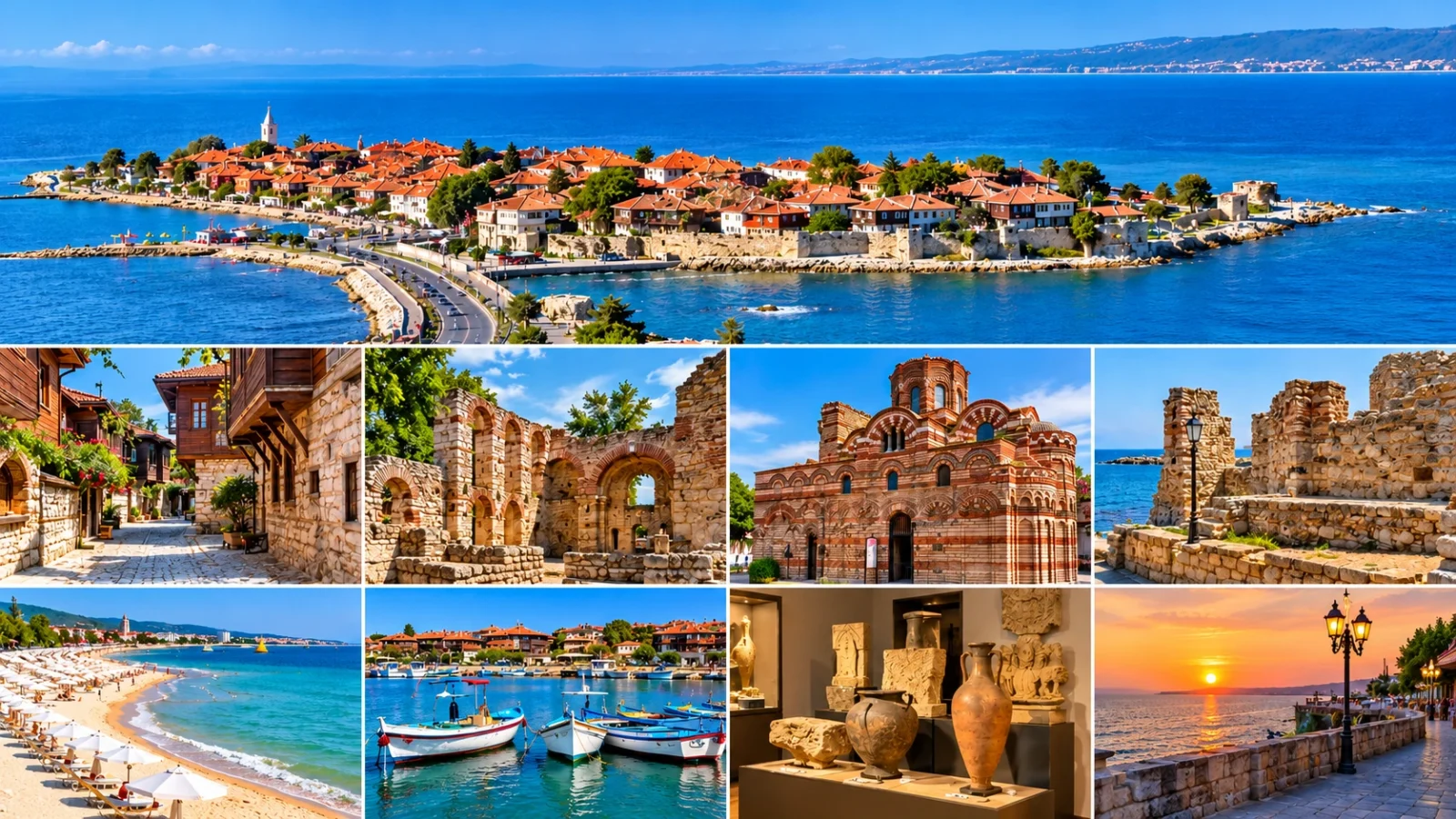
Nessebar, Bulgaria, is a historic Black Sea destination where medieval churches, ancient ruins, traditional wooden houses and sandy beaches come together. Built around a rocky peninsula connected to the mainland by a narrow causeway, this coastal town offers a distinctive mix of cultural heritage and seaside relaxation.
The Ancient City of Nessebar is a UNESCO World Heritage Site, recognised for its archaeological remains, historic churches and traditional architecture. Its history stretches back more than 3,000 years, from its early Thracian settlement to its development as an ancient Greek colony and an important medieval town.
Today, visitors can explore cobbled streets, admire historic buildings, discover museums, enjoy views across the Black Sea and sample traditional Bulgarian food. The nearby beaches and resort of Sunny Beach make Nessebar an appealing choice for travellers who want to combine sightseeing with time by the sea.
Whether you are planning a day trip or a longer coastal holiday, this guide covers the best things to do in Nessebar, Bulgaria, along with the best beaches, when to visit, how to get there and practical tips for planning your trip.
1. Explore the UNESCO-Listed Old Town of Nessebar
The Old Town is the highlight of Nessebar and the best place to begin your visit. Located on a narrow peninsula surrounded by the Black Sea, it contains historic churches, archaeological remains, traditional houses and narrow streets that reflect the town’s long history.
Walking through the historic centre gives you an opportunity to appreciate the different periods that shaped Nessebar. Ancient settlement remains sit alongside medieval religious buildings and traditional Bulgarian houses, creating a historic landscape rather than a single isolated attraction.
Start near the entrance to the peninsula and explore on foot. Follow the cobbled lanes, look for architectural details on the old houses and stop at viewpoints overlooking the water. You will also find small shops, cafés and restaurants throughout the historic centre.
The Old Town is compact enough to explore without a car, although uneven paving can make some streets difficult for visitors with mobility needs.
Best tip: Arrive early during the summer if you prefer quieter streets and more comfortable sightseeing. Allow extra time to explore the smaller lanes rather than rushing between landmarks.
For more historical background, visit the UNESCO World Heritage Centre’s official entry for the Ancient City of Nessebar.
2. Visit the Church of Saint Sophia
The Church of Saint Sophia, also known as the Old Metropolitan Church, is one of Nessebar’s most recognisable historic landmarks. Its surviving stone walls, brickwork and arches reveal the remains of an important early Christian basilica.
Unlike a complete enclosed church, Saint Sophia is now an open ruin. This allows visitors to observe its remaining structure and understand how the building forms part of the wider historic landscape.
The church is particularly interesting for travellers who enjoy architecture and history. Its location among narrow streets and traditional buildings also makes it a natural stop during a walking tour of the Old Town.
Take time to observe the surviving masonry and the outline of the former basilica. The surrounding area is worth exploring too, as several other historic landmarks are within walking distance.
Visitor tip: Follow any protective barriers and avoid climbing on the ruins. If you want a guided explanation, check whether local tours are available during your visit.
3. Admire the Church of Christ Pantocrator
The Church of Christ Pantocrator is another architectural highlight in Nessebar’s Old Town. Dating to the 13th–14th centuries, it is known for its decorative brickwork, contrasting materials and carefully arranged exterior details.
The church stands out because of the patterns created by its bricks and stonework. Arches and ornamental elements give the façade a distinctive appearance that makes it especially interesting for architecture enthusiasts and photographers.
You do not need specialist knowledge of medieval architecture to appreciate the building. Looking closely at its exterior reveals details that can be easy to miss when walking quickly through the historic centre.
Its location makes it easy to combine with the Church of Saint Sophia and nearby historic streets.
Visitor tip: Check current access arrangements if you hope to enter the building. Even when interior access is unavailable, the exterior is worth including in your walking route.
For further background on Nessebar’s heritage, consult the official Bulgarian Ministry of Tourism information.
4. Discover the Ancient Fortification Walls
Nessebar’s surviving fortification walls offer a glimpse into the settlement’s defensive history. The town occupied a strategically important position on the Black Sea, and its coastal location influenced its development as a trading and cultural centre.
Sections of the historic walls remain around the peninsula, particularly near the entrance to the Old Town. These remnants help visitors understand how the settlement was defended and how its geography shaped its layout.
The fortifications are most interesting when viewed alongside the surrounding landscape. The narrow causeway, rocky shoreline and historic buildings provide context for the town’s former strategic importance.
Look for surviving masonry and archaeological features as you walk through the historic centre. You do not need to visit a separate attraction to appreciate these remains because they form part of the wider townscape.
Visitor tip: Stay on public paths and respect signs protecting archaeological features. Avoid climbing on walls or entering restricted areas to take photographs.
5. Explore the Archaeological Museum of Nessebar
The Archaeological Museum offers useful context for understanding Nessebar before or after visiting its historic landmarks. Its collections help explain the settlement’s development through different periods, including its ancient Greek and later medieval history.
Museum displays have included archaeological objects such as pottery, inscriptions, sculptures and other historical artefacts. These discoveries provide insight into trade, religion and everyday life in the communities that occupied the peninsula.
A museum visit can make the town’s outdoor monuments more meaningful. Instead of seeing the churches and ruins as separate attractions, you gain a clearer picture of how Nessebar developed over many centuries.
The museum is also a useful indoor option during hot weather or when you want a break from walking.
Visitor tip: Confirm current opening hours, admission arrangements and exhibitions before visiting, especially outside the main tourist season. You can start with the Ancient Nessebar Museum information on Visit Bulgaria.
6. Admire Nessebar’s Traditional Wooden Houses
Nessebar’s traditional houses are among the most distinctive features of its Old Town. Many historic buildings combine stone lower levels with timber upper storeys, creating a style associated with Bulgaria’s Black Sea region.
Some houses have projecting upper floors, wooden balconies and carefully detailed façades. Their arrangement along narrow streets contributes to the character of the historic peninsula.
These buildings are more than attractive backdrops for photographs. Together with the archaeological remains and churches, they help explain why the Ancient City of Nessebar has international heritage significance.
For the best experience, explore some of the quieter lanes away from the busiest pedestrian routes. Look at the timberwork, rooflines and contrasting materials, and notice how the houses fit into the compact streetscape.
Visitor tip: Many of these buildings are privately occupied. Avoid entering courtyards, blocking doorways or photographing residents without permission.
7. Visit the Church of Saint Stephen
The Church of Saint Stephen, also known as the New Metropolitan Church, is an important stop for visitors interested in Nessebar’s religious heritage. It is particularly noted for its historic frescoes and decorative interior.
Unlike the open ruins of Saint Sophia, Saint Stephen offers a different perspective on the town’s church architecture. Its preserved religious artwork helps visitors appreciate how churches served as places of worship and artistic expression across different periods.
The church also provides a useful contrast with the decorative exterior of Christ Pantocrator. Visiting these landmarks together reveals the variety of architectural and artistic traditions represented in the Old Town.
Visitor tip: Check whether the church is open to visitors on your travel dates. Opening arrangements, admission requirements and photography rules may vary.
For more background on the town’s historic churches, consult the official Nessebar municipal tourism website.
8. Walk Along the Black Sea Waterfront
The waterfront is one of the simplest ways to enjoy Nessebar beyond its historic buildings. Walking beside the sea gives you views of the coastline, boats and the rocky peninsula that defines the town’s setting.
Take a break from sightseeing and follow a public path along the water. Depending on the route, you may find places to sit, cafés and restaurants where you can stop for refreshments.
The waterfront is also a good place to appreciate how closely Nessebar’s history is connected to the sea. Its position along the Black Sea influenced the settlement’s development, trade and cultural connections.
Early morning and late afternoon can be particularly pleasant for walking and photography, although conditions depend on the weather and season.
Visitor tip: Bring drinking water and sun protection in warmer months. If the sea is rough or the weather is windy, follow local safety guidance and avoid unsafe coastal areas.
9. Relax at South Beach Nessebar
If you want to combine sightseeing with time on the sand, South Beach Nessebar is a practical option. It is located in the newer part of town, making it a useful choice for travellers who want a beach break without travelling far from the historic centre.
The beach is known for its sandy shoreline and views across the bay. Depending on the season and the area you choose, facilities may include sun loungers, umbrellas and places to buy food or drinks.
South Beach works well for a relaxed afternoon after exploring churches and museums. It can also suit visitors staying in the newer part of Nessebar who want to spend time by the sea before heading into the Old Town for dinner.
During the main summer season, popular areas may become busy, so consider arriving earlier if you prefer more space.
Visitor tip: Check local swimming conditions and available facilities before visiting. Charges for loungers, umbrellas and other services may vary, so confirm prices on arrival.
For official local information about the coastline, see the Nessebar municipal tourism guide.
10. Discover Small Beaches Around the Old Town
The main beaches are not the only places to enjoy the sea around Nessebar. Smaller coastal spots near the Old Town offer a different experience, often with views of historic buildings and the waterfront.
Plakamoto Beach, for example, is described in the municipal tourist guide as a small beach below the Old Town promenade, near the ancient theatre area. Its setting makes it an option for travellers who want to combine a short seaside stop with historic sightseeing.
These smaller locations may have less space and different facilities from the larger beaches. Access can also involve steps, sloping paths or uneven surfaces, so check the route before visiting if mobility is a concern.
Rather than planning your entire beach day around a small cove, consider using one as a short stop during a walk around the peninsula.
Visitor tip: Beach conditions and services can change with the season. Check local information and observe any safety notices before swimming.
11. Take a Trip to Sunny Beach
Sunny Beach is a major seaside resort close to Nessebar and is easy to include in the same holiday. The resort is known for its broad sandy beach, accommodation, restaurants and seasonal entertainment.
The two destinations offer different experiences. Nessebar is best known for its historic peninsula, traditional houses and medieval churches, while Sunny Beach focuses more on beach activities and resort facilities.
You can stay in one place and visit the other, or divide your time between cultural sightseeing and beach relaxation. For example, spend the morning exploring Nessebar’s Old Town before heading to Sunny Beach for an afternoon by the sea.
Transport options can vary by season and starting point. Local buses, taxis and seasonal services may be available, but you should check current arrangements rather than relying on an old timetable.
Visitor tip: Plan your return journey before going out, especially if you intend to stay for dinner. For more information about the resort, visit the official Nessebar tourism website’s Sunny Beach guide.
12. Try Traditional Bulgarian Food
Sampling Bulgarian food is a worthwhile part of any visit to Nessebar. Restaurants in the Old Town and newer part of the town offer a mix of traditional dishes, grilled foods and seafood, although menus and prices vary.
One popular dish to try is shopska salad, usually prepared with tomatoes, cucumbers, peppers, onions and grated white cheese. It is a refreshing choice during warm weather.
You may also find banitsa, a pastry commonly made with cheese, along with grilled meats, vegetable dishes and other Bulgarian favourites. As Nessebar is a coastal destination, seafood is another option, although the available fish and preparation styles depend on the restaurant.
Dining in the Old Town can be part of the sightseeing experience, particularly when restaurants have outdoor seating. If you want more choice, compare menus in different parts of town rather than assuming every restaurant offers the same experience.
Visitor tip: Check menu prices before ordering and ask staff about ingredients if you have allergies or dietary requirements. For a more relaxed meal, consider dining outside the busiest hours.
13. Browse Local Shops and Visit South Park
Shopping in Nessebar is less about large shopping centres and more about small stores, souvenirs and browsing the historic streets. Depending on the season, you may find jewellery, decorative items, crafts, textiles and keepsakes inspired by Bulgarian culture.
Take time to compare products and ask about their origin if you are looking for locally made items. Products sold in tourist areas are not necessarily all made in the region.
For a different experience, visit South Park in the newer part of Nessebar. The municipal tourism website describes it as a seaside green space with walking areas, rest spots, views and facilities for families.
The park offers a change of pace from the narrow streets of the Old Town. It can be a good place to take a break, especially if you are travelling with children or want a quieter outdoor setting.
Visitor tip: Allow extra time if you want to visit both the historic centre and the newer part of town. Check the local route and facilities before setting out.
14. Consider a Boat Trip or Coastal Excursion
A boat trip can offer a different view of Nessebar and the surrounding Black Sea coastline. Depending on the season, weather and local operators, you may find sightseeing cruises or short coastal excursions.
Seeing the peninsula from the water helps you appreciate its rocky shape and narrow connection to the mainland. It also provides a change of pace after walking through churches, museums and cobbled streets.
Availability is seasonal, and excursions may be cancelled or changed when sea conditions are unsuitable. Not every operator runs trips throughout the year.
Before booking, check the departure point, duration, route, price and cancellation policy. Make sure the activity suits everyone in your group and follow the operator’s safety instructions.
Visitor tip: If boat trips are unavailable, a walk along the waterfront is a simple alternative that still gives you views of the coastline.
15. Enjoy an Evening Walk Through the Old Town
An evening walk is an excellent way to finish a day in Nessebar. As the day cools, you can revisit a favourite landmark, browse shops that remain open or find a place to enjoy dinner overlooking the water.
The historic streets can feel different in the evening, with changing light highlighting the old façades and narrow lanes. During the main summer season, the centre may remain lively, while quieter months can bring a more peaceful atmosphere.
Rather than trying to fit in another attraction, allow time to explore at your own pace. You may discover an architectural detail or waterfront viewpoint you missed earlier in the day.
Visitor tip: If you are staying outside the Old Town, check your return transport and restaurant opening hours before settling in for the evening. Remember that the historic centre is also a residential area.
Best Time to Visit Nessebar, Bulgaria
The best time to visit Nessebar depends on your priorities. Late spring and early autumn can be appealing for sightseeing, while July and August are generally the busiest months for beach holidays.
May and June
May and June can be good months for exploring the historic centre before the peak summer crowds arrive. Outdoor sightseeing may be more comfortable than during the hottest part of the summer.
Sea temperatures can still be cool, particularly in May. If swimming is a priority, check the forecast and local sea conditions before travelling.
July and August
July and August are the main summer holiday months on Bulgaria’s Black Sea coast. Beaches, restaurants and seasonal tourist services are generally busier.
The advantage is a lively coastal atmosphere and a wider range of seasonal activities. The trade-offs can include larger crowds and higher accommodation prices, so booking ahead is sensible.
For a more comfortable sightseeing experience, visit the Old Town early in the morning or later in the afternoon.
September and October
September can be an appealing time to combine cultural sightseeing with beach activities, although weather and sea conditions vary from year to year.
October is usually quieter, but some seasonal restaurants, excursions and tourist services may operate less frequently or close. Check availability before making firm plans.
November to March
Winter is the quietest period and is less suitable for a conventional beach holiday. However, visitors interested in architecture, photography and peaceful walks may still enjoy the historic centre.
Expect cooler weather and fewer seasonal services. Check opening arrangements in advance, especially if you have only one day to explore.
How Many Days Should You Spend in Nessebar?
For most first-time visitors, one full day is enough to explore the main sights in the Old Town. Two days allow more time for beaches, museums and a slower pace.
- One day: Explore the Old Town, see the major churches and fortification remains, visit the Archaeological Museum if it is open, and enjoy a meal by the coast.
- Two days: Spend more time exploring historic streets, relax at South Beach or a smaller coastal spot, and consider a boat trip if one is operating.
- Three days or more: Enjoy a slower seaside holiday and use Nessebar as a base for exploring nearby destinations, including Sunny Beach.
If you enjoy architecture, photography or leisurely meals, leave room in your itinerary for unplanned stops rather than trying to visit every attraction.
A One-Day Walking Itinerary for Nessebar
If you have only one day, the following suggested route will help you make the most of your time without rushing. Adjust the order to suit museum opening hours, weather and your interests.
Morning: Explore the Historic Centre
Start at the entrance to the Old Town and walk through the historic streets. Notice the surviving fortifications and traditional houses before visiting the Church of Saint Sophia.
Continue towards the Church of Christ Pantocrator and explore the surrounding lanes. This part of the day is particularly suitable for architecture and photography.
Midday: Visit a Museum and Enjoy Lunch
Visit the Archaeological Museum if it is open, then choose a nearby restaurant for lunch. Try a Bulgarian dish such as shopska salad or banitsa, or choose seafood if it appeals to you.
Allow enough time for the museum and meal rather than planning too many stops in a short period.
Afternoon: Explore More Heritage or Visit a Beach
If visitor access is available, include the Church of Saint Stephen before continuing towards the waterfront.
If you would prefer a beach break, spend the afternoon at South Beach or another suitable nearby beach instead. Check local conditions and allow enough time to return to your accommodation.
Evening: Enjoy the Old Town at a Relaxed Pace
Finish with a leisurely walk through the historic centre. Browse shops that remain open, find a waterfront viewpoint or enjoy dinner before returning to your accommodation.
Planning tip: You do not need to enter every church or museum to appreciate Nessebar. Choose the attractions that interest you most and leave time to enjoy the town itself.
How to Get to Nessebar, Bulgaria
Nessebar is on Bulgaria’s Black Sea coast, close to Sunny Beach and within road-travel distance of Burgas. The best route depends on where you are arriving from, your travel dates and your budget.
From Burgas Airport
Burgas Airport is a convenient arrival point for many visitors heading to Nessebar and the surrounding coastal resorts. Transport options may include pre-booked transfers, taxis and public transport connections.
Check current services before travelling because flight schedules and onward transport arrangements can change. If your flight arrives late, arranging transport in advance may make the journey easier.
For current local visitor information, consult the official Nessebar municipal tourism website.
From Sofia
Sofia is inland, so travelling to Nessebar generally takes longer than travelling from Burgas. You can compare long-distance bus routes towards Burgas and then arrange onward transport to Nessebar.
Depending on your dates, a flight towards the Burgas area may also be worth considering if a suitable service operates. Compare the complete journey, including transfers and waiting time, rather than looking only at the main travel leg.
Check current schedules before booking.
From Sunny Beach
Sunny Beach is close to Nessebar, making it easy to combine the resort with a visit to the historic town. Depending on your starting point and the season, local buses, taxis and seasonal transport services may be available.
Check your return options before setting out, particularly if you plan to stay for dinner or explore in the evening.
Getting Around Nessebar
Walking is the most practical way to explore the Old Town. Many historic landmarks, traditional houses, shops and waterfront viewpoints are within walking distance of one another.
Wear comfortable shoes because cobbled streets and uneven surfaces can make longer walks tiring. Some routes may also be challenging for wheelchair users and visitors with mobility needs, so check accessibility before visiting individual sites.
For journeys beyond the historic centre, compare local buses, taxis and seasonal services. If you plan to visit a nearby beach or Sunny Beach, check return transport before travelling.
Drivers should research parking arrangements in advance. Parking near popular areas can be limited during the summer, and vehicle access within historic streets may be restricted.
Practical Travel Tips for Nessebar
A little preparation can make your visit more comfortable and help you avoid common planning problems.
- Wear comfortable footwear: Uneven cobblestones make supportive walking shoes a sensible choice.
- Prepare for summer weather: Carry water, sunscreen and a hat during warmer months.
- Check attraction information: Confirm museum opening hours, admission arrangements and access before visiting.
- Book accommodation early: Summer demand can be high, particularly during school holidays.
- Respect historic sites: Follow signs and avoid climbing on archaeological remains.
- Check beach conditions: Follow local swimming guidance and weather warnings.
- Confirm transport schedules: Seasonal services may not operate throughout the year.
- Review restaurant menus: Check prices and ingredients before ordering.
- Respect local residents: Remember that the Old Town is a residential neighbourhood as well as a tourist destination.
- Keep your itinerary flexible: Weather and seasonal opening arrangements can affect excursions and outdoor activities.
For additional local information, the official Nessebar tourism website is a useful starting point.
Frequently Asked Questions About Nessebar, Bulgaria
Is Nessebar worth visiting?
Yes. Nessebar is worth visiting for its historic Old Town, medieval churches, traditional houses, archaeological remains and Black Sea scenery. It is especially appealing to travellers who want to combine cultural sightseeing with a coastal holiday.
What is Nessebar famous for?
Nessebar is known for its historic peninsula, ancient settlement, medieval churches and traditional architecture. The Ancient City of Nessebar was inscribed on the UNESCO World Heritage List in 1983.
Can you explore Nessebar in one day?
Yes. One full day is generally enough to see several major landmarks, explore the historic streets and enjoy the waterfront. A longer stay gives you more time for museums, beaches and nearby destinations.
What is the best month to visit Nessebar?
June and September are worth considering if you want to combine sightseeing with time by the sea. July and August are generally busier and suit travellers prioritising summer beach activities. Weather and sea conditions vary, so check the forecast before travelling.
Which beach is best near Nessebar Old Town?
South Beach Nessebar is a practical option for a larger sandy beach. Smaller spots, including Plakamoto Beach, offer a different experience closer to the historic peninsula. Check access, facilities and local conditions before choosing where to swim.
Is Nessebar suitable for families?
Nessebar can be a good choice for families interested in history and seaside activities. However, cobblestones may make some routes difficult for pushchairs, and families should check beach safety guidance and accessibility before visiting.
Is Nessebar close to Sunny Beach?
Yes. Sunny Beach is close to Nessebar, and many visitors combine the historic town with a beach holiday at the nearby resort. Transport options depend on the season and your exact starting point.
Is Nessebar expensive?
The cost of visiting Nessebar depends on your travel dates, accommodation, dining choices and activities. Summer can be more expensive than quieter months. Comparing accommodation and restaurant options may help you manage your budget.
Is Nessebar easy to explore on foot?
Yes. The historic peninsula is compact, and walking is the most practical way to visit its main landmarks. Uneven cobblestones, summer crowds and limited accessibility in some areas may make certain routes challenging.
Is Nessebar a UNESCO World Heritage Site?
Yes. The Ancient City of Nessebar was added to the UNESCO World Heritage List in 1983. Its significance comes from the long history of the settlement and the archaeological and architectural heritage preserved there. Read the official UNESCO entry for more information.
What should I not miss in Nessebar?
If your time is limited, prioritise the Old Town, the Church of Saint Sophia, the Church of Christ Pantocrator, the Archaeological Museum if open, the traditional houses and the waterfront. Add a beach visit if you have enough time.
Final Thoughts: Is Nessebar Worth Visiting?
Nessebar is one of Bulgaria’s distinctive coastal destinations, combining a long history with traditional architecture, cultural landmarks and Black Sea scenery. Its medieval churches, ancient fortification remains, archaeological collections and historic houses make it an appealing choice for travellers who want more than a conventional beach holiday.
One day is usually enough to discover the main sights, while a longer stay allows time for museums, South Beach, smaller coastal spots and nearby Sunny Beach. The best approach is to choose a few attractions that interest you most and leave time to explore the Old Town at a relaxed pace.
If you are planning a wider trip through Bulgaria, consider combining Nessebar with Sofia, Plovdiv and Veliko Tarnovo. You can also explore Tatavel’s guide to the most beautiful places to visit in Europe for more destination ideas.
With a little planning, Nessebar offers a rewarding mix of history, architecture, local food and seaside relaxation.