

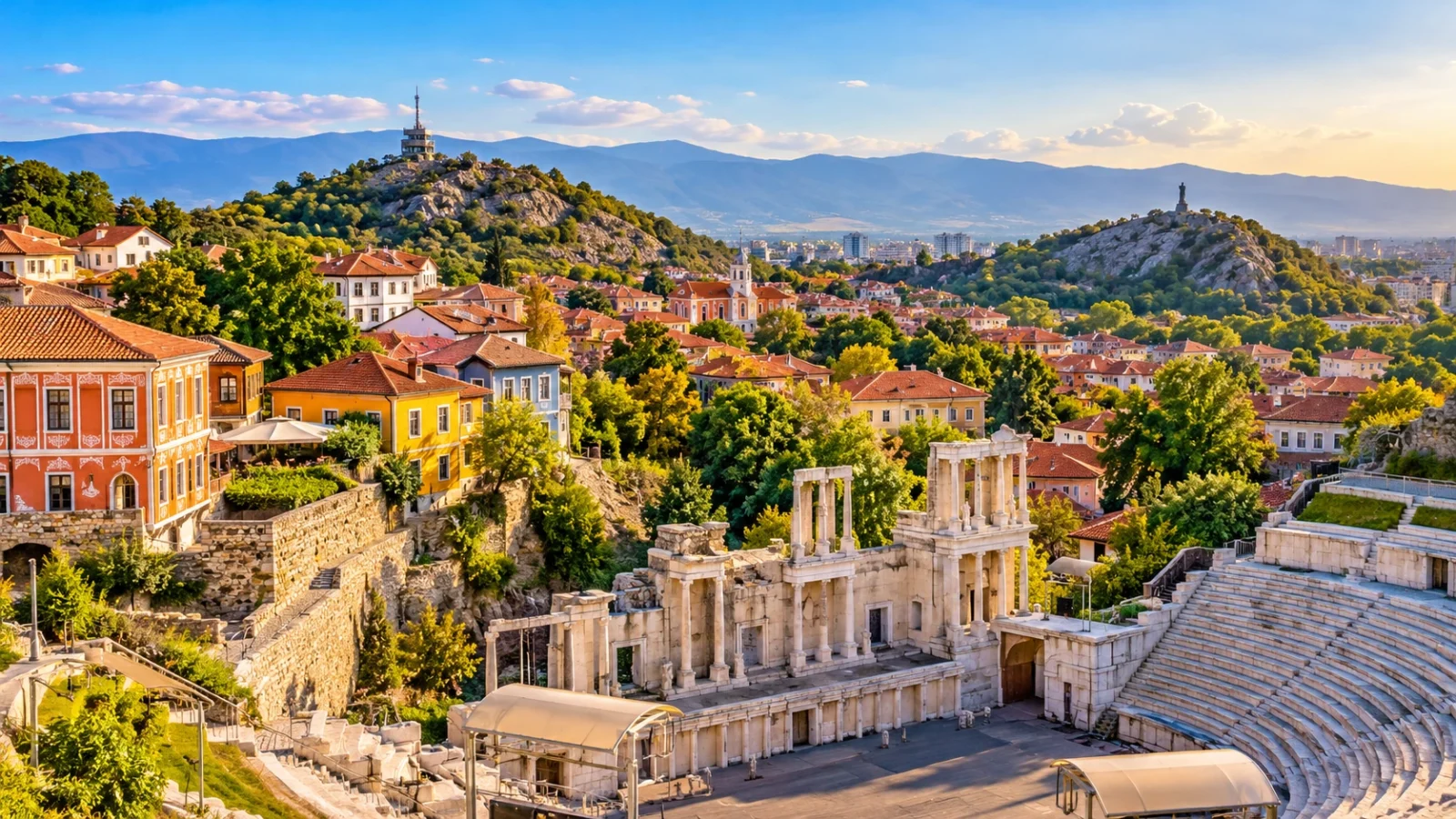
Plovdiv, Bulgaria, is a historic European city where ancient Roman landmarks, traditional architecture and a lively contemporary culture come together. Located in southern Bulgaria, it offers an appealing city break for travellers who enjoy exploring historic streets, visiting archaeological sites, discovering independent cafés and experiencing local culture at a relaxed pace.
If you are looking for the best things to do in Plovdiv, Bulgaria, start with the atmospheric Old Town, the impressive Ancient Theatre of Philippopolis and the remains of the Roman Stadium. Continue to Kapana, a creative neighbourhood filled with cafés and independent businesses, or explore Nebet Tepe for a closer look at the city’s early history.
Plovdiv is particularly rewarding for travellers who enjoy walking between attractions rather than relying on transport throughout the day. Many major sights are located in or near the centre, although the Old Town has steep streets, cobblestones and uneven surfaces that require comfortable footwear.
Whether you are planning a weekend break or adding Bulgaria to a wider European itinerary, this guide explains which places to visit, how to organise your time and what to know before you go.
1. Explore the Historic Old Town of Plovdiv
The Old Town is one of the most rewarding places to begin exploring Plovdiv. Located across three historic hills, the area preserves traditional Bulgarian Revival houses, archaeological remains, museums, churches and narrow cobbled streets. Its architectural and historical reserve contains monuments from several different periods, making it an important part of the city’s cultural heritage.
As you walk through the district, look for colourful façades, decorative wooden details, painted interiors and traditional courtyards. Some historic houses have been converted into museums and galleries, allowing visitors to discover the architecture and domestic life of earlier generations.
The Old Town is also home to several major attractions, including the Ancient Theatre, Nebet Tepe and Hisar Kapia. You can visit these places along a single walking route, although exploring museums and historic houses will require additional time.
Rather than rushing from one landmark to another, allow time to wander through the smaller lanes and appreciate the details of the buildings. This is one of the best areas in Plovdiv for architectural photography and a deeper understanding of Bulgarian history.
Visitor tip: Wear comfortable walking shoes and allow extra time for uphill sections. If you want to enter several historic houses or museums, check their opening arrangements before planning your route.
2. Visit the Ancient Theatre of Philippopolis
The Ancient Theatre of Philippopolis is one of Plovdiv’s most famous landmarks and a highlight for visitors interested in Roman history. Built during the Roman period, it is remarkably well preserved and remains an important cultural venue for performances and events.
The theatre’s curved rows of stone seating surround the stage area, creating a dramatic setting against the surrounding hills. As you explore, notice how the structure follows the natural landscape and how its position offers views across parts of the city.
The site helps explain Plovdiv’s significance as an important ancient settlement. It is also a reminder that historical monuments can remain part of contemporary cultural life rather than serving only as archaeological exhibits.
If a concert or theatrical performance is scheduled during your visit, attending an event can provide a different experience from a daytime sightseeing stop. However, event arrangements may affect general access, so check the official information before travelling.
Visitor tip: Allow time to appreciate the architecture rather than stopping only for photographs. Verify current opening hours, ticket prices and event schedules through the official visitor information.
3. Discover Kapana Creative District
Kapana, often translated as “The Trap,” is one of Plovdiv’s most distinctive neighbourhoods. Its compact network of streets has developed into a creative area known for independent businesses, cafés, restaurants, galleries and cultural spaces. The official Plovdiv tourism guide includes Kapana among the city’s leading attractions.
Kapana offers a different atmosphere from the historic monuments of the Old Town. Here, you can browse small shops, discover local crafts, enjoy street art or stop for coffee between sightseeing visits. It is also a convenient place to experience Plovdiv’s modern food and cultural scene.
The neighbourhood is best explored without a strict schedule. Wander along the side streets, look at the independent shopfronts and choose a café or restaurant that catches your attention. The area can become lively later in the day, making it a pleasant place to spend part of an evening.
Best for: Independent shops, cafés, creative spaces, local food and relaxed evening walks.
Visitor tip: Combine Kapana with the Roman Stadium and the main pedestrian street, as these central attractions can be explored during the same outing.
4. See the Roman Stadium of Philippopolis
The Roman Stadium is one of the most accessible reminders of ancient Philippopolis. Built during the Roman period, it once hosted sporting competitions and other public spectacles. Much of the original structure remains beneath the modern city, but a section is visible near Dzhumaya Square.
The visible remains create an interesting contrast between ancient architecture and modern urban life. Nearby, you will find shops, cafés and the central pedestrian area, making the stadium an easy addition to a walking tour.
Take time to look at the exposed stonework and imagine the scale of the original structure. You do not need to spend an entire afternoon here; a short stop can be worthwhile, particularly if you are exploring several Roman landmarks during your visit.
Visitor tip: Some remains are visible from public areas, while access to enclosed sections may differ. Check current arrangements if you want to explore beyond the publicly accessible areas.
5. Walk Up to Nebet Tepe
Nebet Tepe is one of Plovdiv’s historic hills and an important archaeological site. The municipality identifies it as the location of an early settlement that developed into the ancient Thracian city of Eumolpia. Remains of fortifications and structures from different historical periods can be found around the hill.
Visiting Nebet Tepe offers a different perspective on the city from exploring its museums and busy shopping streets. The uphill walk leads towards archaeological remains and open views across Plovdiv, making it appealing to travellers who enjoy combining history with outdoor exploration.
Take time to look around the site rather than heading directly to the viewpoint. The stone structures and uneven ground are part of its character, and the surrounding landscape helps explain why the hill was important to early settlements.
Nebet Tepe works particularly well as part of an Old Town walking route. You can explore traditional houses and historic streets before continuing uphill, then return towards other attractions when you are ready.
Visitor tip: Wear shoes suitable for uneven surfaces, carry water in warm weather and avoid climbing on fragile archaeological remains.
6. Photograph Hisar Kapia Historic Gate
Hisar Kapia is one of the most recognisable historic landmarks in Plovdiv’s Old Town. The stone gateway, surrounded by traditional houses and cobbled streets, provides a memorable glimpse into the city’s historic fortifications. It forms part of the wider Ancient Plovdiv architectural and historical reserve.
The gate is an easy stop to include during a walk through the Old Town. Its historic architecture and surrounding buildings make it especially appealing to visitors interested in photography and traditional Bulgarian architecture.
Rather than treating Hisar Kapia as an isolated attraction, explore the nearby streets and historic houses as well. This part of the Old Town contains several museums, galleries and architectural landmarks that provide more context for the city’s past.
Visitor tip: Combine Hisar Kapia with the Ancient Theatre and Nebet Tepe. These nearby attractions make a natural route through Plovdiv’s historic district.
7. Explore the Bishop’s Basilica of Philippopolis
The Bishop’s Basilica of Philippopolis is an important archaeological attraction for visitors interested in early Christianity and ancient mosaics. The site preserves the remains of a large early Christian basilica, including intricate floor mosaics that reveal the artistic traditions of the period. It is included among Plovdiv’s principal tourist attractions.
The mosaics are a major highlight. Their decorative patterns and imagery offer insight into the craftsmanship that went into the basilica’s interior. The site also broadens the historical picture of Plovdiv, showing that the city’s heritage extends beyond Roman public buildings to include important religious architecture.
The basilica is a useful addition to an itinerary focused on ancient history. It offers a different experience from the Ancient Theatre and Roman Stadium, especially for travellers interested in archaeological preservation and cultural heritage.
Visitor tip: Check the official visitor website for current opening hours, admission information and any temporary access restrictions before visiting.
8. Relax at the Singing Fountains in Tsar Simeon’s Garden
Tsar Simeon’s Garden is a green space in central Plovdiv that offers a welcome break from sightseeing. Its best-known feature is the Singing Fountains, where water, music and lighting can create an entertaining display. The garden and fountains are included among the city’s recommended visitor experiences.
The garden is a good place to slow down after exploring the historic centre. You can enjoy a leisurely walk, find a bench or take a break between museums and archaeological sites. It can also be a pleasant stop for families and travellers who want some outdoor time.
If you want to see the fountains in action, check local information before your visit. Operating schedules and displays may vary, so do not assume that a show takes place every evening.
Visitor tip: Combine the garden with the main pedestrian street for a relaxed walk through central Plovdiv.
9. Walk Along Plovdiv’s Main Pedestrian Street
Knyaz Aleksandar I Street is Plovdiv’s main pedestrian thoroughfare and one of the easiest places to experience everyday life in the city. The street passes shops, cafés, restaurants and public spaces, while connecting conveniently with central landmarks such as the Roman Stadium and Kapana.
Walking along the street is an activity in its own right. Browse local shops, stop for a drink, enjoy the architecture and watch the city move around you. Its central location also makes it useful for connecting attractions without arranging transport for every stop.
Allow time to explore nearby squares and side streets. You may find additional cafés and shops that are worth visiting, particularly if you prefer a flexible itinerary rather than a packed schedule.
Visitor tip: Use the pedestrian street to connect the Roman Stadium, Kapana and other central sights during the same outing.
10. Walk Beside the Maritsa River
The Maritsa River runs through Plovdiv and forms part of the city’s wider landscape. Sections of the riverbanks provide opportunities for walking and recreation, offering a change of pace from the Old Town and the busy central shopping streets.
A riverside walk allows you to see another side of the city beyond its best-known monuments. Depending on the route you choose, you can enjoy open views and spend time outdoors without needing to visit a ticketed attraction.
The river is best treated as an optional addition to your itinerary rather than a must-see historical site. Choose a route that suits your starting point, available time and mobility needs, as the condition and convenience of paths can vary.
Visitor tip: Consider a riverside walk if you have extra time after exploring the main attractions or want a quieter outdoor activity.
11. Visit Plovdiv’s Museums and Art Galleries
Plovdiv has a varied cultural scene, with museums and galleries covering archaeology, history, traditional Bulgarian culture and visual art. The official tourism guide highlights institutions such as the Regional Archaeological Museum, Regional Ethnographic Museum, Regional History Museum and City Art Gallery
Choosing one or two museums can add depth to your visit. An archaeological collection can help put the city’s ancient monuments into context, while an ethnographic museum offers a different perspective on Bulgarian traditions and domestic life.
You do not need to visit every museum during a short break. Select the ones that match your interests and check current exhibitions, opening hours and admission information before setting out.
If architecture is your main interest, consider visiting one of the historic houses in the Old Town. Their preserved interiors and decorative features offer a closer look at Bulgarian Revival architecture.
Visitor tip: Group museums with nearby attractions to reduce unnecessary walking across the city.
12. Join a Walking Tour or Enjoy Views from Nebet Tepe
A guided walking tour can help you understand how Plovdiv’s ancient settlement, Roman city, Bulgarian Revival architecture and contemporary cultural districts relate to one another. Rather than simply moving between landmarks, you can learn more about the people, buildings and events that shaped the city.
The official tourism material includes walking tours among the ways to discover Plovdiv. Availability, departure times, languages and booking arrangements can change, so check the current details before planning around a tour.
If you prefer to explore independently, create a route through the Old Town, the Ancient Theatre, Nebet Tepe, the Roman Stadium and Kapana. This allows you to spend more time at the places that interest you most.
Nebet Tepe can also be a rewarding place to finish your sightseeing, especially when the weather is comfortable and the light is suitable for photography. Allow enough time for the uphill route and check local conditions before setting out.
Visitor tip: Confirm the meeting point and arrangements with the tour organiser. Do not rely on old schedules or assume a tour operates every day.
Best Time to Visit Plovdiv, Bulgaria
Plovdiv can be visited throughout the year, but spring and autumn are often practical choices for travellers who want to walk between attractions and spend time outdoors without the stronger summer heat. The best season for your trip will depend on the weather, local events and the activities you want to enjoy.
Spring
Spring can be a pleasant time for exploring the Old Town, visiting archaeological sites and enjoying outdoor cafés. Conditions can vary, so bring layers and check the forecast before setting out.
Summer
Summer offers longer daylight hours and opportunities to enjoy outdoor dining and cultural events. Temperatures can become hot, particularly in the middle of the day, so plan uphill walks for cooler periods and carry water.
Autumn
Autumn can be appealing for travellers who prefer a relaxed sightseeing pace. It is a good season for historic walks, museums, photography and sampling local food.
Winter
Winter visits are possible, especially if you enjoy museums, architecture and cafés. However, colder weather can make extended outdoor exploration less comfortable, and attraction schedules may vary seasonally.
Planning tip: Check the local forecast and official attraction schedules before travelling, especially if your plans depend on outdoor walks or a performance at the Ancient Theatre.
How to Spend One or Two Days in Plovdiv
One full day can cover several major attractions, but staying for two days allows you to explore at a more relaxed pace. These suggested routes group nearby places together to make your sightseeing more practical.
One-Day Plovdiv Itinerary
Morning: Explore the Old Town
Start with the Old Town’s traditional houses and historic streets. Visit the Ancient Theatre, then continue towards Hisar Kapia and Nebet Tepe if time and mobility allow.
Afternoon: Discover Roman Plovdiv and Kapana
Head towards the Roman Stadium and the central pedestrian area. Continue into Kapana for lunch, coffee or a look around the independent shops and galleries. If early Christian history interests you, add the Bishop’s Basilica after checking its opening arrangements.
Evening: Enjoy a relaxed city walk
Finish with a stroll along the main pedestrian street or visit Tsar Simeon’s Garden if time permits. Choose a local restaurant for dinner and enjoy the city at a slower pace.
Two-Day Plovdiv Itinerary
Day 1: Historic Plovdiv
- Explore the Old Town and its traditional architecture.
- Visit the Ancient Theatre.
- Walk up to Nebet Tepe for historic views.
- See Hisar Kapia and choose a museum or historic house.
- Enjoy dinner in or near the historic centre.
Day 2: Roman heritage and modern city life
- Visit the Roman Stadium and explore the central pedestrian area.
- Spend time in Kapana’s cafés, shops and creative spaces.
- Explore the Bishop’s Basilica and its mosaics.
- Walk through Tsar Simeon’s Garden.
- Add a riverside walk or guided tour if time allows.
These itineraries are flexible suggestions rather than fixed schedules. Check the opening times of ticketed attractions and allow extra time for uphill walking, meals and stops along the way.
Getting Around Plovdiv
Many of Plovdiv’s central attractions can be reached on foot, making walking a convenient way to explore. However, the Old Town includes hills, cobbled lanes and uneven surfaces, so plan according to your fitness and mobility needs.
Walking
Walking is suitable for exploring the Old Town, Kapana, the Roman Stadium and the central pedestrian area. Comfortable shoes are important, particularly if your route includes Nebet Tepe.
Public Transport
Local buses can be useful for reaching places outside the main sightseeing area. Check current routes, timetables and ticket information before travelling, as services and arrangements may change.
Taxis
Taxis can be convenient for longer journeys or when walking is difficult. Confirm the fare or displayed rate before starting the trip, and use a reputable service.
Arriving by Train or Intercity Bus
Plovdiv can be included in a wider Bulgaria itinerary using intercity transport. Check departure times, station details and ticket arrangements with the relevant operator before travelling.
For help planning your stay, finding attractions or checking transport information, consult the Plovdiv Municipality Tourist Information page or the official Plovdiv tourism website.
Practical Tips for Visiting Plovdiv
A little preparation can make exploring Plovdiv easier and help you get more from your visit.
- Wear comfortable footwear: Historic streets and hilltop routes can be uneven or steep.
- Check opening hours: Museums, archaeological sites and historic houses may follow different schedules.
- Carry water in warm weather: This is particularly useful when walking uphill or exploring outdoor ruins.
- Allow time for meals: Leave room to enjoy local food and cafés rather than packing the itinerary too tightly.
- Respect historic sites: Avoid climbing on archaeological remains or touching fragile features.
- Check event information: Performances and concerts may affect access to the Ancient Theatre.
- Keep plans flexible: Weather, seasonal schedules and local events may change the best order for your activities.
The city’s tourist information service provides visitor guidance on attractions, accommodation, restaurants, transport and forthcoming events. Check its official website for current service details and opening hours.
Frequently Asked Questions About Plovdiv
Is Plovdiv, Bulgaria, worth visiting?
Yes. Plovdiv is worth considering if you enjoy ancient history, historic architecture, cultural attractions, independent cafés and walkable city centres. Its Roman remains and Old Town offer a different experience from a trip focused solely on Bulgaria’s capital.
How many days do you need in Plovdiv?
One full day can cover several central highlights, but two days allow a more relaxed visit with time for museums, meals, neighbourhood walks and additional attractions. Travellers with a strong interest in history or architecture may want to stay longer.
What is Plovdiv best known for?
Plovdiv is known for its Ancient Theatre, Roman Stadium, historic Old Town, Bulgarian Revival architecture, archaeological heritage and Kapana creative district. These attractions reflect the city’s development across several historical periods. <Cite refs={[“turn354434search1″,”turn354434search5”]}/>
Can you explore Plovdiv on foot?
Many central attractions can be visited on foot. However, some routes include hills, cobblestones and uneven surfaces, so comfortable footwear and realistic walking times are important.
What are the best free things to do in Plovdiv?
Walking through public streets in the Old Town, exploring Kapana, strolling along the main pedestrian street and enjoying public outdoor spaces can be budget-friendly activities. Check individual attraction rules because museums and archaeological sites may charge admission.
Is Plovdiv suitable for a weekend break?
Yes. A weekend gives you time to see the main historical attractions, explore the creative district, sample local food and enjoy the city without rushing through every stop.
What should you not miss in Plovdiv?
If you have limited time, prioritise the Old Town, Ancient Theatre, Roman Stadium, Kapana and Nebet Tepe. Add the Bishop’s Basilica if you are interested in archaeological remains and early Christian mosaics.
Is Plovdiv a good destination for history lovers?
Yes. The city preserves evidence of Thracian, Roman, medieval and Bulgarian Revival periods. Its archaeological sites, historic houses and museums make it particularly appealing to visitors interested in European history.
Final Thoughts: Is Plovdiv Worth Adding to Your Europe Trip?
Plovdiv is a rewarding destination for travellers who want to combine European city exploration with history, architecture and local culture. From the Ancient Theatre and Roman Stadium to the Old Town, Kapana and Tsar Simeon’s Garden, there is enough variety to fill a short break or complement a longer trip around Bulgaria.
The city’s appeal lies in the way its different historical periods sit alongside everyday modern life. You can explore ancient remains in the morning, browse independent shops in the afternoon and finish the day with a relaxed meal or a walk through the centre.
For the best experience, group nearby attractions together, check current visitor information before setting out and leave room for unplanned discoveries. If you are building a wider itinerary, Plovdiv can be a useful addition to a trip exploring Bulgaria and southeastern Europe.
Planning more European travel? Explore Tatavel’s guide to beautiful places to visit in Europe for more destination inspiration.