

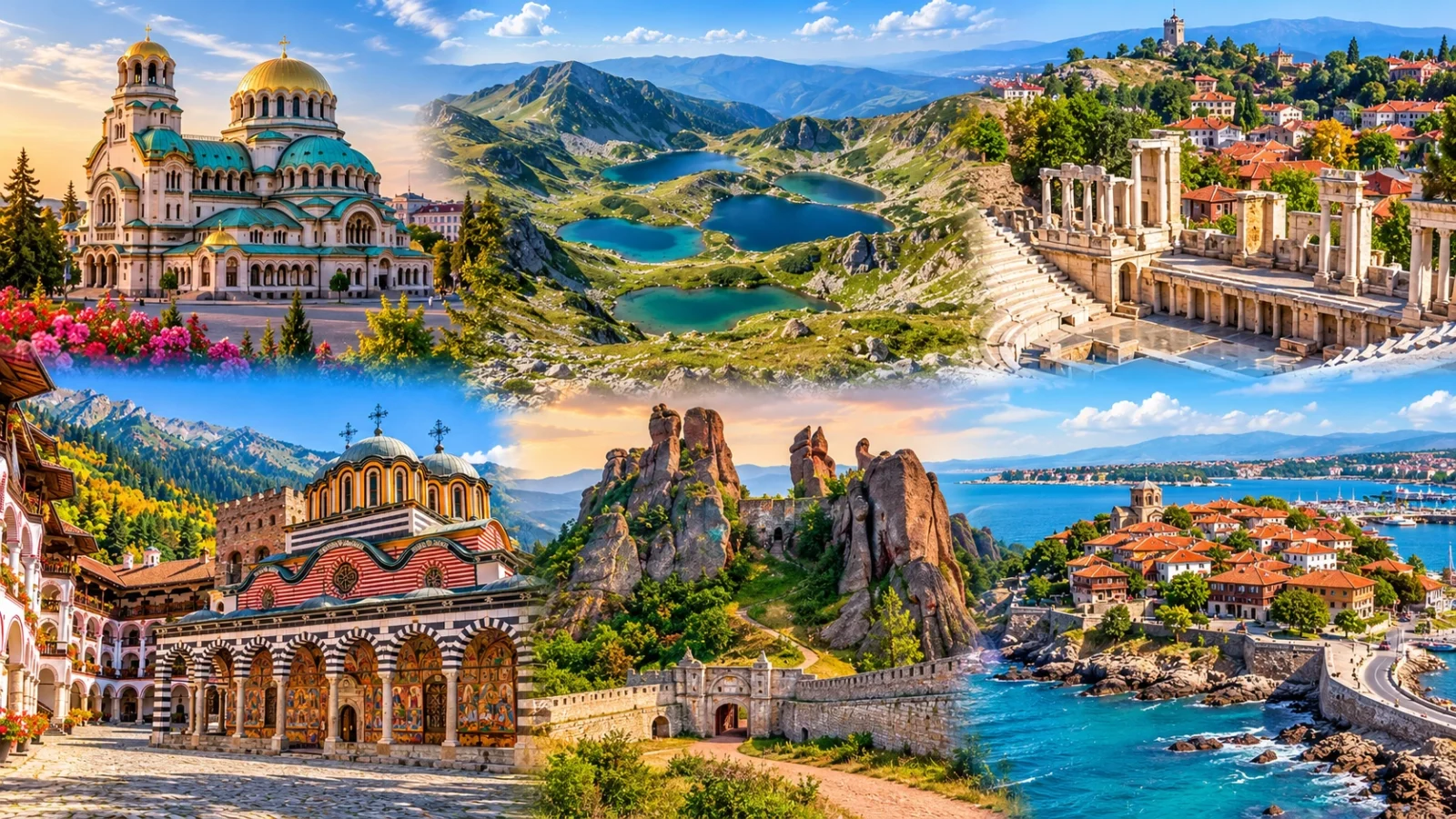
Bulgaria offers an impressive mix of historic cities, medieval fortresses, mountain landscapes, traditional villages and beautiful Black Sea beaches. Located in southeastern Europe, the country is an appealing destination for travellers who want to combine cultural sightseeing with outdoor adventures, regional food and relaxing coastal stays.
The best places to visit in Bulgaria offer very different experiences. Sofia combines Roman ruins and grand Orthodox churches with a lively modern city centre. Plovdiv is known for its ancient theatre and colourful Old Town, while Rila Monastery stands out for its elaborate frescoes and mountain setting. Along the coast, Nessebar and Sozopol offer historic streets beside the Black Sea.
Beyond these well-known destinations, Bulgaria rewards travellers who venture further. You can explore the medieval fortress of Veliko Tarnovo, hike towards the Seven Rila Lakes, discover the unusual rock formations around Belogradchik or visit the Rose Valley near Kazanlak.
Whether you are planning a three-day city break, a week-long cultural trip or a longer journey across the country, this guide explains where to go, what to see, how much time to allow and when to visit.
1. Sofia — Discover Bulgaria’s Capital
Sofia is the natural starting point for many trips to Bulgaria. Located beneath Vitosha Mountain, the capital brings together Roman archaeological remains, Orthodox churches, museums, green spaces and a lively restaurant scene.
One of Sofia’s advantages is that many central attractions can be explored on foot, making it possible to experience several different periods of the city’s history in a single day.
Best things to do in Sofia
- Alexander Nevsky Cathedral: Visit one of the city’s most recognisable landmarks, known for its monumental architecture, domes and ornate interior.
- Ancient Serdica: Discover archaeological remains from the Roman settlement beneath and around the modern city centre.
- St George Rotunda: See a historic brick church surrounded by later buildings in the heart of Sofia.
- Vitosha Boulevard: Browse shops, stop for coffee and enjoy the lively pedestrian atmosphere.
- Borisova Gradina: Take a break in one of Sofia’s best-known parks.
- National Palace of Culture: Explore the surrounding public spaces and gardens.
Food is another reason to spend time in Sofia. Try banitsa, a traditional pastry, shopska salad or grilled kebapche at a local restaurant. Menus vary, so look for regional dishes rather than relying exclusively on international chains.
How long should you spend in Sofia?
Allow two full days for the main sights, museums and central neighbourhoods. A third day gives you time for additional attractions or an excursion towards the surrounding mountains.
Sofia is also a useful transport base for exploring other parts of Bulgaria. Before booking accommodation, consider whether you want to stay near the central attractions, the main transport connections or a quieter residential neighbourhood.
For further recommendations, link this section to your published 15 Best Things to Do in Sofia, Bulgaria guide.
Useful official resource: Visit Sofia.
2. Plovdiv — Explore Ancient History and a Creative Old Town
Plovdiv is one of Bulgaria’s most rewarding destinations for travellers interested in history, architecture and culture. The city has a long past, with Roman monuments, traditional Bulgarian Revival houses and modern creative spaces existing close together.
Its Old Town is best explored slowly. Cobbled streets lead past historic buildings, small galleries, churches and viewpoints, while the Kapana district provides a more contemporary atmosphere.
Best things to do in Plovdiv
- Ancient Theatre of Philippopolis: Explore a remarkable Roman-era theatre that continues to host performances and events.
- Plovdiv Old Town: Walk among historic houses, cobbled lanes and cultural landmarks.
- Kapana Creative District: Discover independent businesses, cafés, restaurants and galleries.
- Roman Stadium: See the surviving remains near the central pedestrian area.
- Nebet Tepe: Visit a historic hilltop area associated with Plovdiv’s early settlement and enjoy views across the city.
- Museums and galleries: Explore archaeological collections and exhibitions that reveal more about the city’s development.
Plovdiv works particularly well for travellers who prefer to combine sightseeing with relaxed meals and evening walks. You can visit major landmarks during the day and spend the evening around Kapana or the pedestrian centre.
Best time to visit Plovdiv
Spring and early autumn are often comfortable for exploring on foot. Summer can be hot, so visit exposed archaeological sites early in the day and save indoor attractions or café stops for the afternoon.
Allow one full day for the main highlights. Two days are preferable if you want to visit museums and explore the Old Town without rushing.
Link this section to your published Things to Do in Plovdiv, Bulgaria article.
3. Rila Monastery — Visit Bulgaria’s Famous Mountain Monastery
Rila Monastery is one of Bulgaria’s most important cultural and religious landmarks. Surrounded by forested mountains, it is recognised for its colourful frescoes, striped courtyard arcades, historic tower and long association with Bulgarian spiritual and cultural life.
The monastery was founded in the tenth century and became an important centre of religious learning and cultural preservation. It was added to the UNESCO World Heritage List in 1983.
What to see at Rila Monastery
- Church of the Nativity of the Virgin: Admire the church’s decorative exterior, religious artwork and richly painted interior.
- Courtyard arcades: Look closely at the striped arches and detailed frescoes surrounding the central courtyard.
- Hrelyo Tower: See the historic stone tower, one of the monastery complex’s most distinctive structures.
- Church History Museum: Discover exhibits relating to the monastery’s history and religious heritage.
- Raphael’s Cross: Look for information about this celebrated example of intricate woodcarving in the museum collection.
- Mountain scenery: Enjoy the setting among the Rila Mountains, which provides a striking contrast to the monastery’s colourful architecture.
How to get to Rila Monastery
Rila Monastery is approximately 120 kilometres from Sofia by road, according to Bulgaria’s Ministry of Tourism. An organised excursion or rental car can be convenient for visitors who want to make the journey in one day.
If travelling independently, check public transport connections carefully. Services, transfers and return options can vary, so do not assume that a direct bus will operate on your chosen date.
Allow a full day for a return excursion from Sofia, including the journey and time to explore the complex. The visit itself may take around two to three hours, depending on which areas are open and whether you visit the museums.
Opening hours and admission arrangements differ between parts of the complex. Check the official Rila Monastery website before travelling.
For detailed directions and visitor information, link to your published Rila Monastery, Bulgaria: Complete Visitor Guide article.
4. Veliko Tarnovo — Discover Bulgaria’s Medieval Heritage
Veliko Tarnovo is one of Bulgaria’s most atmospheric historic cities. Built across steep hills above the Yantra River, it was an important political and cultural centre during the Second Bulgarian Empire.
Its elevated position, medieval fortifications and traditional streets make the city particularly appealing to travellers who enjoy history and photography.
Best things to do in Veliko Tarnovo
- Tsarevets Fortress: Explore the remains of the medieval stronghold that dominates the historic landscape.
- Samovodska Charshia: Browse a traditional craft and market street with artisan shops and historic buildings.
- Asenevtsi Monument: See the monument associated with Bulgarian rulers and enjoy views over the city.
- Historic streets: Walk through the old centre, where traditional buildings occupy steep and winding lanes.
- Yantra River viewpoints: Find elevated places to appreciate the city’s dramatic setting.
- Arbanasi: Consider a side trip to this nearby historic settlement, known for traditional architecture and religious heritage.
Some streets and paths are steep, so comfortable shoes are essential. Visitors with limited mobility should check access arrangements for individual attractions before planning a route.
How long should you stay?
One full day allows time for the main historic attractions. Two days are better if you want to explore Arbanasi or take a slower approach to the city.
Link to your published Veliko Tarnovo, Bulgaria: 15 Best Places to Visit guide.
5. Nessebar — Combine Ancient History with the Black Sea
Nessebar is one of Bulgaria’s most distinctive coastal destinations. Its historic Old Town occupies a peninsula connected to the mainland by a narrow causeway, creating a memorable setting of traditional houses, old churches and sea views.
The settlement has a history stretching back more than three millennia. Its archaeological remains and historic architecture reflect the different civilisations that have shaped the town. The Ancient City of Nessebar became a UNESCO World Heritage Site in 1983.
Best things to do in Nessebar
- Explore the Old Town: Walk through narrow streets lined with traditional houses and historic stonework.
- Church of Christ Pantocrator: Admire the medieval architecture and decorative brickwork.
- Archaeological Museum: Learn about the settlement’s history through its collections.
- Ancient fortifications: Look for surviving sections of the historic defensive walls.
- Waterfront walks: Enjoy views of the Black Sea and stop at a seaside café.
- Nearby beaches: Combine cultural sightseeing with time beside the water.
When should you visit Nessebar?
Summer is the busiest season, particularly when beach resorts nearby attract holidaymakers. Visiting early in the morning or later in the afternoon can make the Old Town more comfortable to explore.
Allow at least half a day for the historic centre. A full day is better if you want to include museums, waterfront walks and beach time.
For official heritage information, consult the UNESCO World Heritage listing for the Ancient City of Nessebar.
Link this section to your published 15 Best Things to Do in Nessebar, Bulgaria article.
6. Bansko — Enjoy the Pirin Mountains
Bansko is best known as a mountain resort near the Pirin Mountains. It attracts winter visitors for skiing and snowboarding, but its historic centre and surrounding scenery also make it appealing outside the winter season.
Best things to do in Bansko
- Explore the old town: Walk through traditional streets and look for historic stone houses.
- Visit Holy Trinity Church: Discover one of the town’s best-known religious landmarks.
- Enjoy winter sports: Investigate ski passes, equipment rental and lessons if visiting during the snow season.
- Explore the Pirin Mountains: Choose suitable hiking routes or guided outdoor excursions during the warmer months.
- Try regional cuisine: Sample traditional dishes at local restaurants.
- Relax at a spa: Check the facilities offered by local hotels and wellness centres.
When is Bansko worth visiting?
Winter is the main season for snow sports, but conditions vary from year to year. Summer offers opportunities for mountain walks and outdoor activities, subject to weather and trail conditions.
Bansko is a good choice if you want a mountain-focused stay rather than a conventional city break. Allow one or two days for the town and its immediate surroundings, or longer if skiing or hiking is the main purpose of your trip.
7. Varna — Experience Bulgaria’s Black Sea City
Varna is a major city on Bulgaria’s Black Sea coast. It combines beaches, parks, museums and a lively centre, making it suitable for travellers who want seaside relaxation without giving up urban attractions.
Best things to do in Varna
- Varna Beach: Spend time beside the sea during the warmer months.
- Sea Garden: Walk through the landscaped coastal park and enjoy its green spaces.
- Archaeological Museum: Learn about the region’s history through its collections.
- Roman Baths: Explore the remains of the ancient bath complex.
- Central streets: Browse shops, cafés and restaurants.
- Local seafood: Look for fish dishes and other coastal specialities.
How long should you stay in Varna?
Two days is a useful starting point for sightseeing and beach time. Stay longer if you want to use the city as a base for exploring the northern Black Sea coast.
Summer is popular for swimming and seaside activities. Late spring and early autumn can be appealing for visitors who prefer sightseeing in milder conditions.
8. Burgas — Explore the Southern Black Sea Coast
Burgas is a coastal city with a relaxed waterfront atmosphere, green spaces, cultural attractions and transport connections to nearby seaside destinations.
It is worth considering if you want a city-based stay with access to beaches and the wider southern coast.
Best things to do in Burgas
- Sea Garden: Enjoy landscaped paths, coastal views and open spaces.
- Burgas Beach: Walk beside the Black Sea or relax on the sand.
- City centre: Explore pedestrian streets, cafés and restaurants.
- Museums: Learn about the region’s history and culture.
- St Anastasia Island: Investigate boat excursions and opening arrangements for this historic island.
- Nearby coastal towns: Consider trips to Sozopol and Nessebar, depending on your route and available transport.
Who should visit Burgas?
Burgas suits travellers who want beaches, restaurants and access to several coastal destinations. It can be a convenient base for a wider Black Sea itinerary, particularly if you prefer a city with everyday local life rather than staying entirely in a resort.
9. Koprivshtitsa — Discover Traditional Bulgarian Houses
Koprivshtitsa is a historic mountain town known for its colourful traditional houses, cultural museums and role in Bulgaria’s national revival. Its atmosphere is very different from the country’s larger cities and coastal resorts.
Best things to do in Koprivshtitsa
- Walk through the historic centre: Explore streets lined with preserved traditional houses.
- Visit house museums: Learn about notable local figures and the town’s place in Bulgarian history.
- Admire traditional architecture: Look for painted façades, timber details and enclosed courtyards.
- Discover local crafts: Browse artisan businesses where available.
- Enjoy the surrounding hills: Take in the quieter countryside setting.
Koprivshtitsa is closely associated with the April Uprising of 1876, an important event in Bulgaria’s struggle against Ottoman rule. Its museums help explain the historical events and people connected with that period.
Allow a full day for the main attractions. Staying overnight can provide more time to enjoy the town at a slower pace.
10. Seven Rila Lakes — Explore Bulgaria’s Alpine Scenery
The Seven Rila Lakes are a famous natural attraction high in the Rila Mountains. The glacial lakes sit at different elevations and are surrounded by mountain slopes, open terrain and panoramic viewpoints.
This destination is particularly appealing to hikers, photographers and travellers who want to experience Bulgaria’s natural landscape beyond its cities.
What to do at the Seven Rila Lakes
- Follow marked hiking trails: Choose a route appropriate for your fitness and experience.
- Enjoy panoramic viewpoints: See the lakes from higher ground when conditions and your chosen route permit.
- Take landscape photographs: The views change with light, weather and season.
- Observe the natural environment: Stay on suitable paths and follow local conservation guidance.
- Plan a mountain day trip: Allow time for transport, walking and possible delays caused by weather.
What should you know before visiting?
This is a mountain hike, not a simple urban walk. Temperatures may be lower than in Sofia, weather can change quickly and some trails can be difficult for inexperienced hikers.
Check forecasts, trail conditions, access arrangements and any lift operations before departure. Wear appropriate footwear, bring water and extra layers, and turn back if conditions become unsafe.
A full day is a sensible allowance for a hiking-focused visit.
11. Belogradchik Rocks — See a Remarkable Natural Landscape
The Belogradchik Rocks are unusual sandstone and conglomerate formations in northwestern Bulgaria. Weathering has shaped them into towers and columns, creating a landscape that is very different from the country’s coastal scenery.
The nearby Belogradchik Fortress makes the visit especially interesting because its defensive structures use the surrounding rock formations as part of the natural setting.
Best things to do at Belogradchik
- Explore Belogradchik Fortress: Walk through the historic fortifications and see the landscape from elevated positions.
- Visit scenic viewpoints: Look across the rock formations and surrounding countryside.
- Take photographs: Changing light can bring out the shapes and colours of the rocks.
- Learn about local legends: Discover traditional stories associated with individual formations.
- Explore the surrounding region: Consider additional rural attractions if you have enough time.
How should you plan your visit?
Belogradchik is in northwestern Bulgaria, so it may require more travel time than destinations around Sofia or Plovdiv. Check public transport connections carefully or consider including it in a road trip.
Wear comfortable shoes and take care on uneven paths. A half-day can cover the main sights, but a full day allows a more relaxed visit.
12. Kazanlak — Discover the Rose Valley and Thracian Heritage
Kazanlak lies in Bulgaria’s Rose Valley, an area associated with rose cultivation and the production of rose oil. The region is especially well known during the rose-picking season, when local celebrations may take place.
Kazanlak is also important for its Thracian heritage. The Thracian Tomb of Kazanlak, recognised by UNESCO, contains remarkable ancient wall paintings and provides insight into the region’s archaeological history.
Best things to do in Kazanlak
- Learn about rose production: Visit a museum or producer to understand how roses are cultivated and processed.
- Experience the Rose Festival: Check the official programme if visiting during the annual celebrations.
- Explore Thracian history: Visit museums and archaeological attractions in the region.
- Walk around the town centre: Discover cafés, shops and local public spaces.
- Explore the wider valley: Consider nearby historical sites if you have additional time.
When should you visit Kazanlak?
Late spring and early summer are popular for visitors interested in roses, but flowering and festival dates vary. Confirm the calendar before planning a trip around a particular event.
The original Thracian Tomb has conservation requirements, so check current visitor access and museum arrangements before travelling.
Kazanlak is particularly suitable for travellers who enjoy history, cultural traditions and regional festivals.
13. Melnik — Explore Sandstone Formations and Local Traditions
Melnik is a small town in southwestern Bulgaria, known for its historic buildings, distinctive sandstone formations and regional wine-making traditions. Its setting gives the town a character that differs from the country’s larger urban and coastal destinations.
Best things to do in Melnik
- Explore the historic centre: Walk among traditional buildings and narrow streets.
- See the sandstone formations: Enjoy views of the unusual landscape around the town.
- Discover regional wine traditions: Investigate local wineries or tasting venues and confirm availability in advance.
- Visit nearby Rozhen Monastery: Consider this historic religious complex as part of a wider excursion.
- Try local food: Look for regional dishes at family-run restaurants.
Melnik is worth considering if you want a quieter destination combining landscape, history and local culture. It can also fit into an itinerary through southwestern Bulgaria.
Allow several hours for the town itself or a full day if you want to explore nearby attractions.
14. Tryavna — Experience Traditional Crafts and Architecture
Tryavna is a historic town in central Bulgaria associated with traditional architecture, woodcarving and artistic heritage. It is an appealing destination for visitors interested in craftsmanship and local history.
Best things to do in Tryavna
- Explore the old town: Walk around the historic square and nearby streets.
- Discover woodcarving traditions: Look for museums, exhibitions and workshops.
- Admire traditional buildings: Notice the architectural details associated with Bulgaria’s Revival period.
- Visit local museums: Explore collections relating to crafts, history and regional culture.
- Enjoy a café stop: Take time to appreciate the town’s slower pace.
Tryavna is a good choice for travellers who prefer cultural experiences over large tourist attractions. If you want to see a craft demonstration, contact the venue or check its schedule before travelling.
A day is enough for the main sights, while an overnight stay allows more time to explore the surrounding area.
15. Sozopol — Enjoy a Historic Seaside Town
Sozopol is one of the southern Black Sea coast’s best-known historic towns. It combines traditional wooden houses, narrow streets, waterfront views and nearby beaches.
The Old Town is particularly attractive for travellers who want to combine cultural sightseeing with time beside the sea.
Best things to do in Sozopol
- Explore the Old Town: Walk through historic streets and admire the traditional architecture.
- Enjoy waterfront views: Find viewpoints overlooking the Black Sea.
- Relax on nearby beaches: Choose a beach that suits your preferred atmosphere and accommodation.
- Visit local cultural attractions: Learn more about the town’s history and maritime heritage.
- Try regional seafood: Look for seasonal fish dishes at local restaurants.
- Explore the surrounding coast: Add nearby beaches or natural areas if time allows.
When should you visit Sozopol?
Summer is the main season for swimming and beach holidays. Late spring and early autumn can be appealing for visitors who prefer milder weather and quieter streets, although some seasonal businesses may operate reduced hours.
Sozopol is a good option for couples, families and travellers who want a historic coastal setting rather than a large modern resort.
Best Time to Visit Bulgaria
The best time to visit Bulgaria depends on your priorities. The coast, major cities and mountain regions can experience different weather conditions, so choose your travel dates according to the activities you want to enjoy.
Spring: April to June
Spring is suitable for city sightseeing, cultural visits and countryside excursions. Landscapes become greener and temperatures generally become more comfortable for walking.
Late spring may also suit visitors interested in the Rose Valley, although flowering and festival dates vary each year.
Summer: June to August
Summer is the main season for Black Sea beaches, outdoor dining and many mountain excursions. Nessebar, Varna, Burgas and Sozopol can become busy during the main holiday period.
Plan city sightseeing for the cooler parts of the day and check mountain weather before hiking.
Autumn: September to October
Early autumn can be a pleasant time for exploring historic towns, cultural attractions and countryside landscapes. Coastal weather may remain suitable for some beach activities in September, but conditions become less predictable as the season progresses.
Winter: December to February
Winter is the main season for skiing and snowboarding in resorts such as Bansko, subject to snow conditions. Cities can still be visited, but cold weather and shorter daylight hours may affect your plans.
Check mountain forecasts, road conditions and seasonal operating schedules before booking winter activities.
How Many Days Do You Need in Bulgaria?
The time you need depends on whether you want to explore one region or travel across the country. Bulgaria’s cities, mountains and coast offer different experiences, and trying to cover everything in a few days can make a trip unnecessarily tiring.
Bulgaria in 3 days
Focus on Sofia and one nearby attraction. You could explore the capital and consider a visit to Rila Monastery if transport arrangements allow a comfortable return journey.
Bulgaria in 5 days
Combine Sofia, Plovdiv and Rila Monastery, or concentrate on Sofia and a coastal destination if a beach holiday is your priority.
Bulgaria in 7 days
Choose a regional focus. A cultural trip could combine Sofia, Plovdiv, Rila Monastery and Veliko Tarnovo. A coastal holiday could centre on Burgas, Nessebar and Sozopol, with enough time for beaches and historic streets.
Bulgaria in 10 to 14 days
A longer trip provides more flexibility to combine major cities, traditional towns, mountain scenery and the Black Sea coast. A rental car can help with rural destinations, but allow realistic driving times and consider road conditions and parking.
A More Practical Seven-Day Bulgaria Itinerary
This sample itinerary focuses on the capital and central Bulgaria rather than attempting to cover every region. It is best treated as a framework: check transport schedules before booking accommodation or committing to a particular order.
Day 1: Explore Sofia
Visit Alexander Nevsky Cathedral, explore the central archaeological sites and spend time along Vitosha Boulevard.
Day 2: Visit Rila Monastery
Set aside the day for the journey and a visit to Rila Monastery. An organised excursion may be convenient if you do not have a rental car.
Day 3: Travel to Plovdiv
Travel to Plovdiv, explore the Old Town and enjoy an evening in the central pedestrian area or Kapana district.
Day 4: Discover Plovdiv
Visit the Ancient Theatre, Roman Stadium and any museums you missed. Staying a second night allows you to explore without rushing.
Day 5: Travel to Veliko Tarnovo
Continue to Veliko Tarnovo and explore the historic centre if you arrive with sufficient time. Otherwise, reserve the main sightseeing for the following morning.
Day 6: Explore Veliko Tarnovo
Visit Tsarevets Fortress, explore the old streets and consider nearby Arbanasi if your schedule allows.
Day 7: Return or continue your journey
Use this day for the return journey or continue towards another destination if your departure arrangements permit. Reaching the Black Sea coast would be a substantial additional journey, so it is better treated as an extension rather than a guaranteed day-seven excursion.
Prefer a beach holiday? Plan a separate coastal itinerary around Burgas, Nessebar and Sozopol rather than combining the entire coast with the capital and mountain destinations in one rushed week.
Practical Travel Tips for Bulgaria
Plan transport before booking day trips
Major cities have transport connections, but reaching rural attractions and mountain trailheads can require additional planning. Check timetables for your exact dates and confirm the return journey before relying on public transport.
A rental car can be helpful for smaller towns and countryside destinations. Factor in driving time, parking, road conditions and mountain weather.
Understand the currency
Bulgaria adopted the euro on 1 January 2026. Use current euro prices when planning your budget, and consult official guidance if you need information about payment arrangements or cash conversion.
Cards are accepted at many hotels, restaurants and larger businesses, but carrying some cash may be useful in smaller towns and at certain local businesses.
Learn a few Bulgarian phrases
Bulgarian uses the Cyrillic alphabet. Two useful expressions are “Zdraveyte,” a polite greeting, and “Blagodarya,” meaning thank you.
English is used in many tourist-facing businesses, but proficiency varies, especially outside major destinations.
Respect local customs at religious sites
When visiting churches and monasteries, wear respectful clothing and follow posted instructions. Photography and access to particular areas may be restricted, so check signs or ask staff.
Prepare properly for mountain excursions
Conditions in the Rila and Pirin mountains can differ sharply from those in Sofia or the coastal cities. Check the forecast and trail conditions, bring water and suitable clothing, and select a route appropriate for your ability.
Book popular coastal accommodation early
The Black Sea coast can become busy in summer. Compare accommodation locations carefully: a historic town, a large resort and a quieter nearby settlement can offer very different holiday experiences.
Try traditional Bulgarian food
Look for banitsa, shopska salad, tarator and grilled kebapche, along with regional specialities. Ask restaurant staff about ingredients and preparation if you have dietary requirements.
Confirm opening hours and ticket details
Museum schedules, attraction access, mountain lifts and seasonal services can change. Check official websites shortly before your visit rather than relying on old travel information.
Frequently Asked Questions About Bulgaria
What are the best places to visit in Bulgaria for first-time visitors?
Sofia, Plovdiv, Rila Monastery, Veliko Tarnovo and Nessebar are excellent starting points. Together, they offer city sightseeing, cultural heritage, mountain scenery and coastal experiences.
Is Bulgaria worth visiting in 2026?
Bulgaria is worth considering if you enjoy historic cities, cultural attractions, mountain landscapes and seaside holidays. Its variety makes it possible to build a trip around very different interests.
What is the most beautiful place in Bulgaria?
There is no single answer. Rila Monastery is known for its architecture and mountain setting, the Seven Rila Lakes for alpine scenery, and Nessebar and Sozopol for historic coastal landscapes.
Is Bulgaria suitable for a family holiday?
Yes. Families can combine beaches, city parks, museums, historic sites and suitable outdoor activities. Choose destinations according to children’s ages, mobility and interests, and check local facilities before booking.
Can you travel around Bulgaria without a car?
Yes, particularly if you focus on major cities such as Sofia and Plovdiv. However, reaching remote attractions, mountain trailheads and some smaller towns can be more complicated. Check connections and return services before setting out.
How much does a trip to Bulgaria cost?
The total cost depends on travel dates, accommodation, transport, meals and activities. Peak summer coastal holidays and winter sports trips can have different pricing patterns from city breaks outside the busiest seasons. Compare current prices for your dates before setting a budget.
Is Bulgaria good for nature lovers?
Yes. The country offers mountain landscapes, glacial lakes, forests, unusual rock formations and a varied coastline. The Seven Rila Lakes, Pirin Mountains and Belogradchik Rocks are notable options for outdoor-focused travellers.
Which Bulgarian coastal destinations are best?
Nessebar and Sozopol are attractive for historic streets and seaside scenery, while Varna and Burgas offer larger-city facilities alongside beaches. Choose according to whether you prefer a historic town, a resort atmosphere or an urban base.
Is Bulgaria suitable for a road trip?
Yes. A road trip can make it easier to reach smaller towns, rural landscapes and less accessible attractions. Plan realistic driving days and check road conditions, parking and seasonal access.
Which places in Bulgaria are best for history lovers?
Sofia, Plovdiv, Veliko Tarnovo, Nessebar, Koprivshtitsa and Kazanlak are strong choices. Rila Monastery is also important for understanding Bulgaria’s religious and cultural heritage.
Final Thoughts: Choose the Best Places in Bulgaria for Your Trip
Bulgaria offers far more variety than many travellers expect. Sofia and Plovdiv are excellent for city sightseeing and history, Rila Monastery combines cultural significance with mountain scenery, and Veliko Tarnovo offers a memorable medieval setting.
Along the Black Sea, Nessebar and Sozopol combine historic streets with seaside views, while Varna and Burgas provide larger-city bases for coastal holidays. Travellers interested in nature can explore the Seven Rila Lakes and Belogradchik Rocks, while Koprivshtitsa, Melnik, Kazanlak and Tryavna offer different perspectives on Bulgarian traditions.
You do not need to visit all 15 destinations in a single trip. Choose the places that best match your interests, allow enough time for travel between regions and verify seasonal arrangements before departure.
For more European travel inspiration, continue exploring Tatavel’s guide to the most beautiful places to visit in Europe.